
Appliances Relocated Without Internal Damage
Appliance Moving & Relocation in Boise for refrigerators, washers, and ovens requiring careful transport to prevent mechanical failure
Refrigerators tipped at wrong angles during moves lose coolant effectiveness, washing machines with unsecured drums develop balance problems, and ovens with glass doors crack when not supported properly during stairway navigation. Space Age Movers transports appliances throughout Boise and Kuna using techniques that protect both external finishes and internal mechanisms, including keeping refrigerators upright during the entire move and securing washer drums before any tilting occurs. Delivery is completed with placement exactly where the appliance will connect, not just inside the doorway where you're left figuring out final positioning.
The service handles moves when you're replacing appliances and need the old unit removed and the new one installed in its place, relocating appliances during kitchen remodels, or moving rental property appliances between units. Disconnect and reconnection guidance is provided when water lines, gas connections, or electrical requirements are involved, though licensed plumbers or electricians handle actual hookups for code compliance.
Arrange a consultation to discuss access routes and any disconnect requirements before the scheduled move.
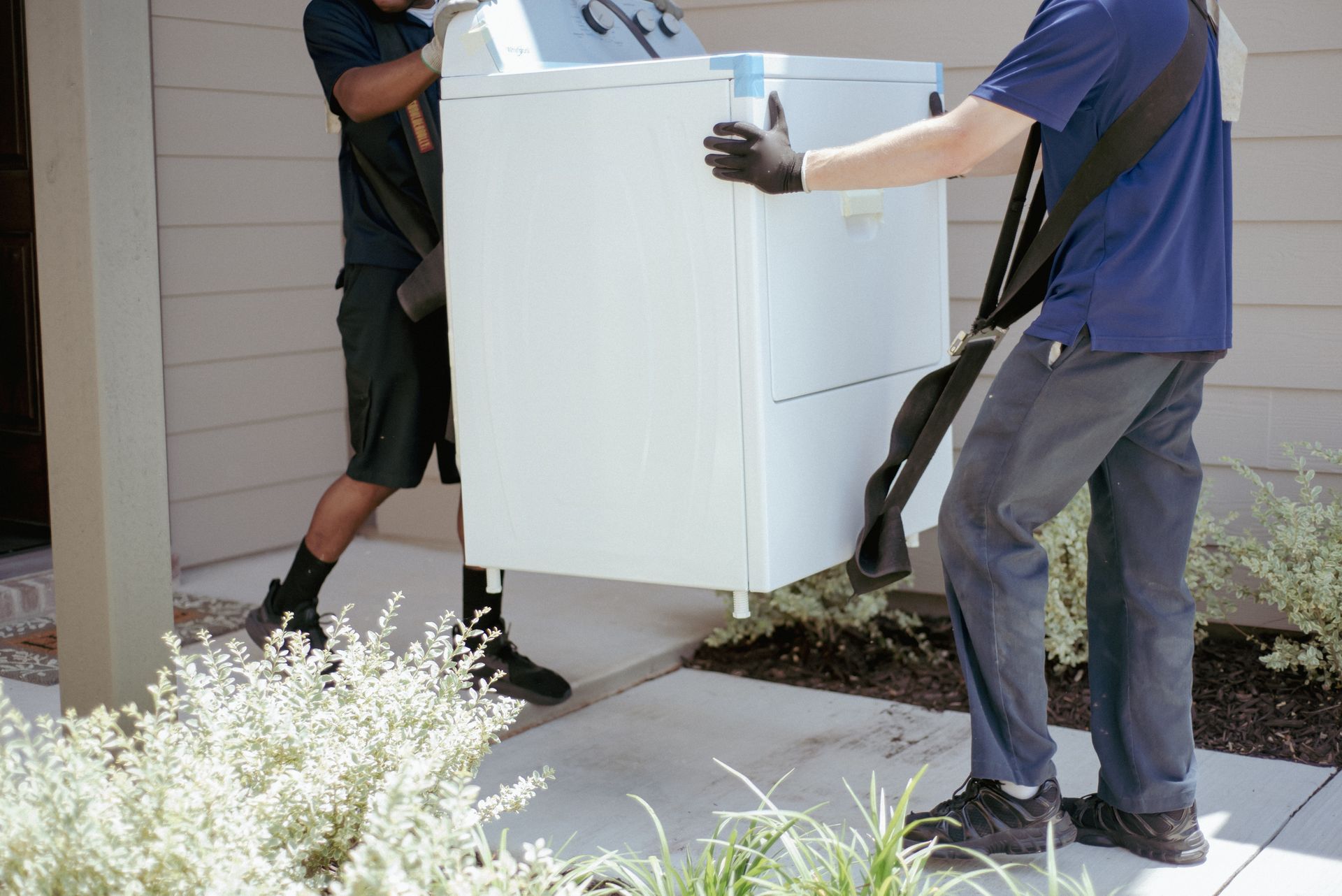
What Proper Appliance Transport Requires
Safe appliance moving starts with preparation specific to each appliance type—refrigerators need defrosting and door securing, washers require drum locks or internal bracing to prevent the tub from slamming during transport, and ranges must have racks removed and oven doors secured to prevent hinge stress. Appliance dollies distribute weight properly and include straps that hold units against the frame during stair navigation, preventing the tipping that damages compressors or control boards.
After transport, your appliances sit level in their final positions, doors open and close smoothly without new alignment issues, and you're not dealing with dents on visible surfaces or scratches across finished panels. Refrigerators are left to settle before reconnection to allow coolant levels to stabilize, and washers are leveled using adjustable feet so spin cycles don't create walking or excessive vibration.
Protection against damage includes corner guards on units with exposed edges, padded straps that don't dent stainless steel, and floor protection along the entire path to prevent scuffs on hardwood or tile. Costs vary based on appliance size and weight, stair involvement, and distance carried from the original location to the truck and then to final placement.
Common Appliance Moving Questions
Property owners scheduling appliance relocation usually want to know about preparation steps, what equipment is used, and whether connections are included in the service.
What preparation is required before appliances can be moved?
Refrigerators should be emptied and defrosted at least 24 hours before the move to prevent water leakage during transport, washers and dishwashers need water supply lines disconnected, and gas ranges require the gas line shut off by a qualified technician. Electric ranges only need the power cord unplugged if accessible.
How do you prevent refrigerator compressor damage during moves?
Refrigerators remain upright throughout the entire transport process rather than being laid flat, which prevents oil from flowing into coolant lines where it causes compressor problems. Appliance dollies with tall frames and securing straps keep units vertical even during stairway navigation and truck loading.
Does appliance moving include reconnecting water lines and testing operation?
The service includes placement and basic leveling, but water line connections, gas hookups, and electrical wiring require licensed professionals for code compliance and warranty protection. Guidance on what connections are needed and how to arrange proper hookup is provided when appliances are delivered.
Can you move appliances up or down multiple flights of stairs safely?
Multi-floor appliance moves are handled using specialized dollies and two-person teams that control descent and ascent speeds, though narrow stairways in older Boise homes sometimes require external access through windows or balconies when stairway width won't accommodate appliance dimensions plus equipment.
What happens if an appliance won't fit through the delivery path?
Pre-move assessments measure doorways, hallways, and stairway dimensions against appliance specs to identify fit issues before moving day, and alternative access routes are planned when standard paths won't work. Exterior delivery through removed patio doors or temporary window openings is arranged when no interior path exists.
Space Age Movers coordinates appliance delivery timing with your remodel schedule or new appliance delivery appointments to minimize downtime. Contact them to schedule your appliance relocation with access and preparation details confirmed in advance.